



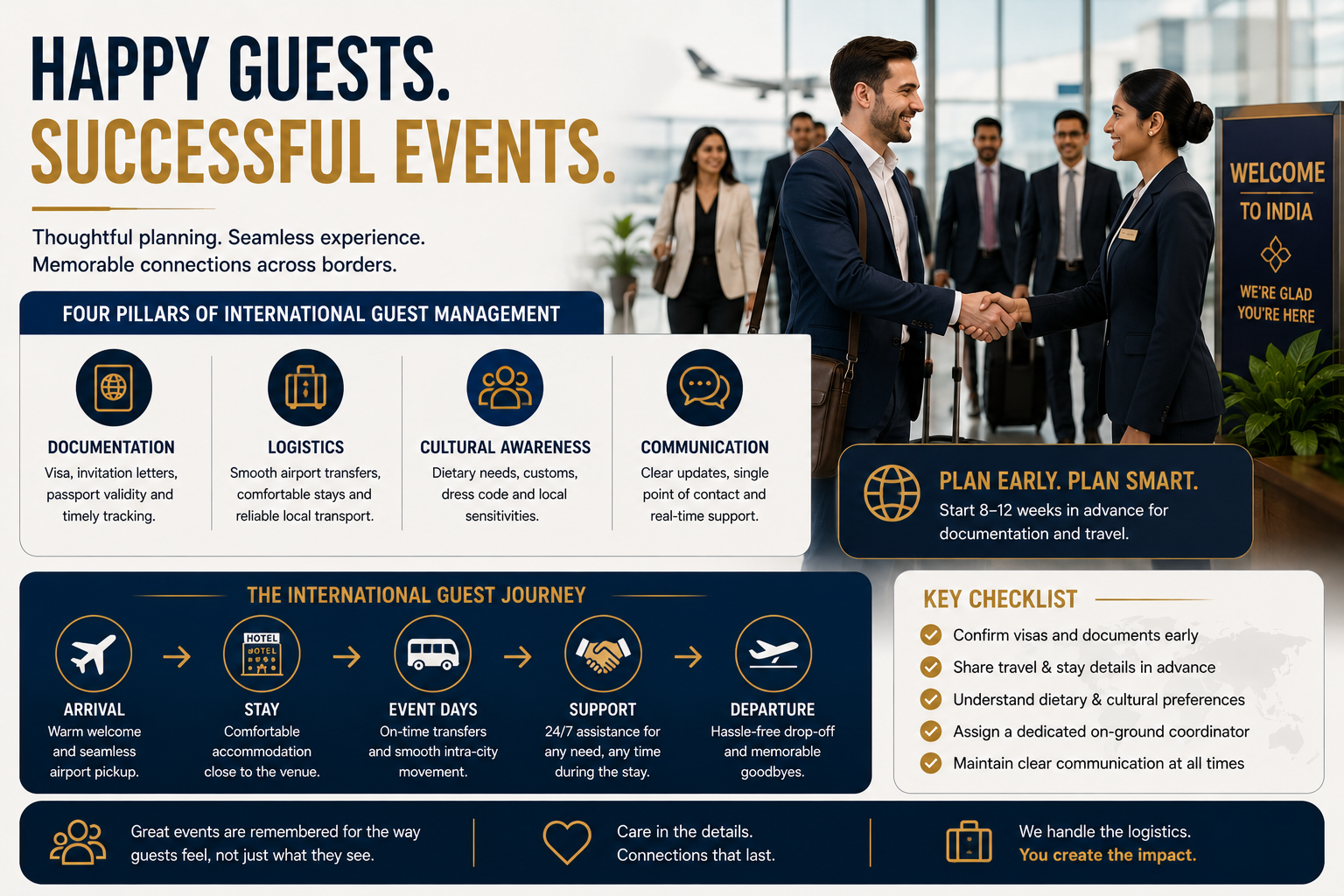
Managing international guests for a corporate event comes down to four things working together: documentation, logistics, cultural awareness, and communication. Get any one of these wrong and the rest of the event, however well designed, starts to feel shaky to the very people you invited. That's really what international corporate event planning is about at its core: making sure a guest who's crossed a border to attend feels just as looked after as someone attending from across town.
This matters more than most planners expect going in. A delayed visa, a confusing airport pickup, or a menu that ignores dietary needs can quietly undo weeks of preparation and leave a bad first impression before the event has even started. Business travelers and executives notice these details, and they remember them long after the agenda is forgotten.
In this blog, we'll walk through the key steps involved in planning for international attendees, from paperwork to on-ground execution.
key Key Takeaway
Successful cross-border guest hospitality relies on early documentation tracking (8-12 weeks prior), airport-to-hotel buffer management, pre-surveyed dietary and cultural needs, and clear single-point communication channels.
Start with Visa and Travel Documentation Early
Documentation is usually the first hurdle, and it's the one most likely to cause real delays if left until the last minute. For guests travelling into India, this often means a formal invitation letter on company letterhead, details of the host organization, purpose of visit, and confirmation of who's covering costs during the stay. Some countries also require sponsorship declarations or proof of return travel before a visa is even considered.
The safest approach is to start this process eight to twelve weeks before the event, particularly for guests from countries with longer visa processing windows. Assign one person on your team to track every guest's documentation status, rather than leaving it to individual attendees to sort out on their own. A simple shared tracker with visa status, passport validity, and submission dates goes a long way toward avoiding last-minute scrambles.
What Makes International Guest Management Different from Domestic Events?
International guest management involves several layers that domestic events simply don't require. Beyond visas, you're coordinating across time zones, currencies, languages, and unfamiliar local customs, all while making sure the guest experience still feels effortless from the outside. It also means building in more buffer time everywhere: for flight delays, customs checks, and the general unpredictability that comes with cross-border travel. None of this is difficult once you know to expect it, but it does require a different level of planning than a same-city event would.
Build Business Event Logistics Around the Guest Journey
Good business event logistics start from the moment a guest lands, not from the moment they walk into the venue. Thinking through the entire journey, rather than just the event itself, is what separates a smooth experience from a stressful one.
Airport Pickup and Transfers
A reliable, pre-arranged pickup removes one of the biggest sources of anxiety for a first-time visitor. Share driver details and contact numbers in advance so guests aren't searching for a name card in a crowded arrivals hall.
Accommodation Near the Venue
Choosing hotels within a short distance of the event venue cuts down on daily travel stress and gives guests more flexibility if schedules shift.
Local Transport During Event
Whether it's a shuttle service or arranged cabs, guests shouldn't have to figure out local transport apps or currency on their own during a packed itinerary.
On-Ground Support
A dedicated local contact who guests can reach at any hour makes a genuine difference, especially for anything from a missed connection to a medical concern.
Respect Cultural Nuances to Make Guests Feel Welcome
Small cultural details often matter more than the big logistical ones. A guest who feels their customs and preferences were considered tends to remember the event far more warmly. Some practical points worth building into your planning:
- check_circle Confirm dietary requirements and restrictions well in advance, not just on the day
- check_circle Research appropriate greetings and forms of address for different cultures represented
- check_circle Keep dress code expectations clear in event communications
- check_circle Be mindful of scheduling around prayer times, holidays, or regional customs
None of this requires guesswork. A short pre-event questionnaire to attendees can surface most of these preferences weeks ahead of time.
Keep Communication Clear Across Time Zones and Languages
Clear communication is what ties the entire experience together. Assign a dedicated coordinator for international guests so questions don't get lost between departments. A shared WhatsApp group or event app for real-time updates works well, particularly for last-minute schedule changes. Keep written communication simple and avoid idioms or region-specific phrasing that might not translate cleanly for non-native English speakers.
How Far in Advance Should You Start Planning for International Guests?
As a general rule, start eight to twelve weeks before the event for documentation and travel arrangements, and at least four weeks out for cultural and communication preparation. Larger events with executive delegations or guests from countries with slower visa processing should push this timeline even earlier.
Why Professional Support Makes International Guest Management Easier
Coordinating all of this in-house, alongside everything else an event requires, is a lot to manage well. This is where working with an experienced travel partner tends to pay off. Aster Travel handles corporate travel, MICE, and group logistics end to end, from visa documentation support and airport transfers to personalized itineraries and on-ground coordination, so internal teams aren't stretched across every moving part themselves. For organizations juggling international guest lists alongside their core event planning, that kind of support often makes the difference between a smooth event and a stressful one.
Conclusion
International corporate event planning ultimately comes down to preparation and empathy: knowing what your guests need before they have to ask for it. Getting the documentation right, mapping out logistics from arrival to departure, respecting cultural context, and keeping communication simple will carry most of the work on their own.
There's no single trick to making international guests feel at home at a corporate event, just consistent attention to the details that matter to them. The organizations that get this right tend to build the kind of reputation that makes future guests, partners, and delegates want to say yes the next time they're invited.
Written by Shaji
Corporate Travel & MICE Specialist
Expert in corporate travel management, group MICE logistics, and VIP hospitality services for international delegations at Aster Travel.
Planning an International Corporate Event or MICE Retreat?
Let Aster Travel handle your end-to-end delegation logistics, visa documentation support, airport transfers, and luxury venue bookings.