



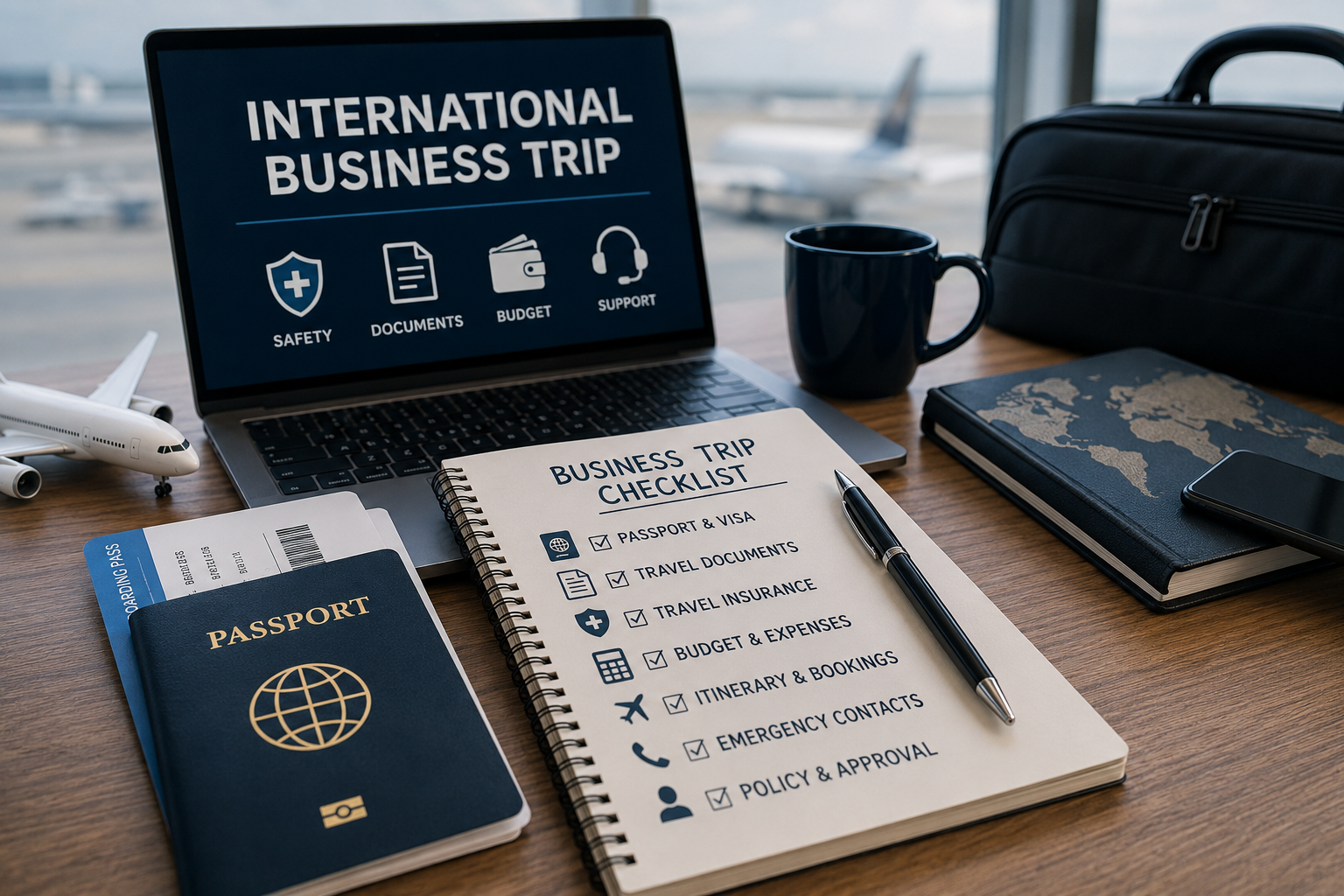
Before sending an employee across a border, a company needs to be confident about four things: that the traveller's documents genuinely match the purpose of the trip, that the budget accounts for more than airfare and accommodation, that medical and emergency cover follows the employee out of the country, and that someone internally owns the trip from approval through to reimbursement. Most problems in international business trip planning come from these details, not from the booking itself.
This matters more now than it did a few years ago. Around 74% of Indian companies expect bigger travel budgets and more employee mobility this year, and India's corporate travel spending has grown 15% to reach roughly $43 billion as businesses expand across borders. More trips mean more first-time international travellers, tighter turnarounds, and far more room for something small to become expensive. And when it does go wrong, the liability usually sits with the employer, not the person on the plane.
Here's what companies should sort out before anyone gets on a flight.
1. Get the Documentation Right Before You Book Anything
Documentation is where most trips quietly go sideways. It's also the part with the least flexibility, because immigration officers don't negotiate.
badge Passport and Entry Validity
Most destinations require a passport valid for at least six months beyond the return date. Check this for every traveller well before booking, not the week of departure. Renewals take time, and a passport that expires in four months will end the trip at the check-in counter.
assignment Visa Category and Permitted Activities
This is the big one. A business visa usually covers meetings, negotiations, conferences, and classroom training. It often does not cover hands-on delivery of services, installations, or anything a host country would classify as local employment. Getting this wrong can mean refused entry, and in some jurisdictions civil or even criminal penalties for the employer. Paying the employee from an Indian payroll makes no difference to how the destination country sees the activity.
folder_shared Employer-Issued Supporting Documents
An invitation letter, a letter confirming employment and trip purpose, proof of return travel, and confirmed accommodation should be prepared as a standard pack. Border officers ask for these more often than people expect.
2. How Far in Advance Should International Business Trip Planning Begin?
Three to four weeks is a realistic minimum for straightforward destinations, and six to eight weeks for anything involving complex visa processing or multiple countries. Visa processing alone commonly runs five to fifteen working days, with delays usually caused by incomplete paperwork or the wrong visa category being selected.
Lead time also protects the budget. Booking international flights two to three weeks out rather than two days out is often the single largest cost saving available, and it gives you room to rebook if a meeting date shifts. Rushed business travel preparation is almost always more expensive travel.
4. What Does Duty of Care Mean in Corporate Travel?
Duty of care is the employer's obligation to protect the health, safety, and wellbeing of employees while they travel on company business. It isn't a formality. Over 90% of employees say they simply won't travel on a trip they consider unsafe.
In practice, meeting it means:
5. Prepare the Traveller, Not Just the Itinerary
The last piece is the employee. Schedule the first day lightly if there's a significant time difference, because a strategic meeting held at 9 am after a red-eye rarely goes well for anyone. Share basic notes on local business etiquette, greetings, dress expectations, and meeting norms. Small courtesies land well and cost nothing.
Much of this coordination is exactly what a managed international corporate travel partner absorbs, which is often the deciding factor for HR and admin teams handling a growing volume of trips alongside their actual jobs.
Conclusion
Strong international business trip planning is mostly unglamorous work done early: verifying documents against the real purpose of the trip, building a budget that survives contact with the destination, arranging cover that works outside home borders, and giving the traveller a clear point of contact if something goes wrong. None of it is complicated on its own. It just needs to happen before the booking, not after.
The companies that travel well tend to be the ones that treat the process as repeatable rather than reinventing it every time someone needs to fly out. Write the policy down, define the lead times, standardise the document pack, and the tenth trip becomes far easier than the first. That consistency is what turns business travel from a recurring scramble into something the team can actually rely on.