



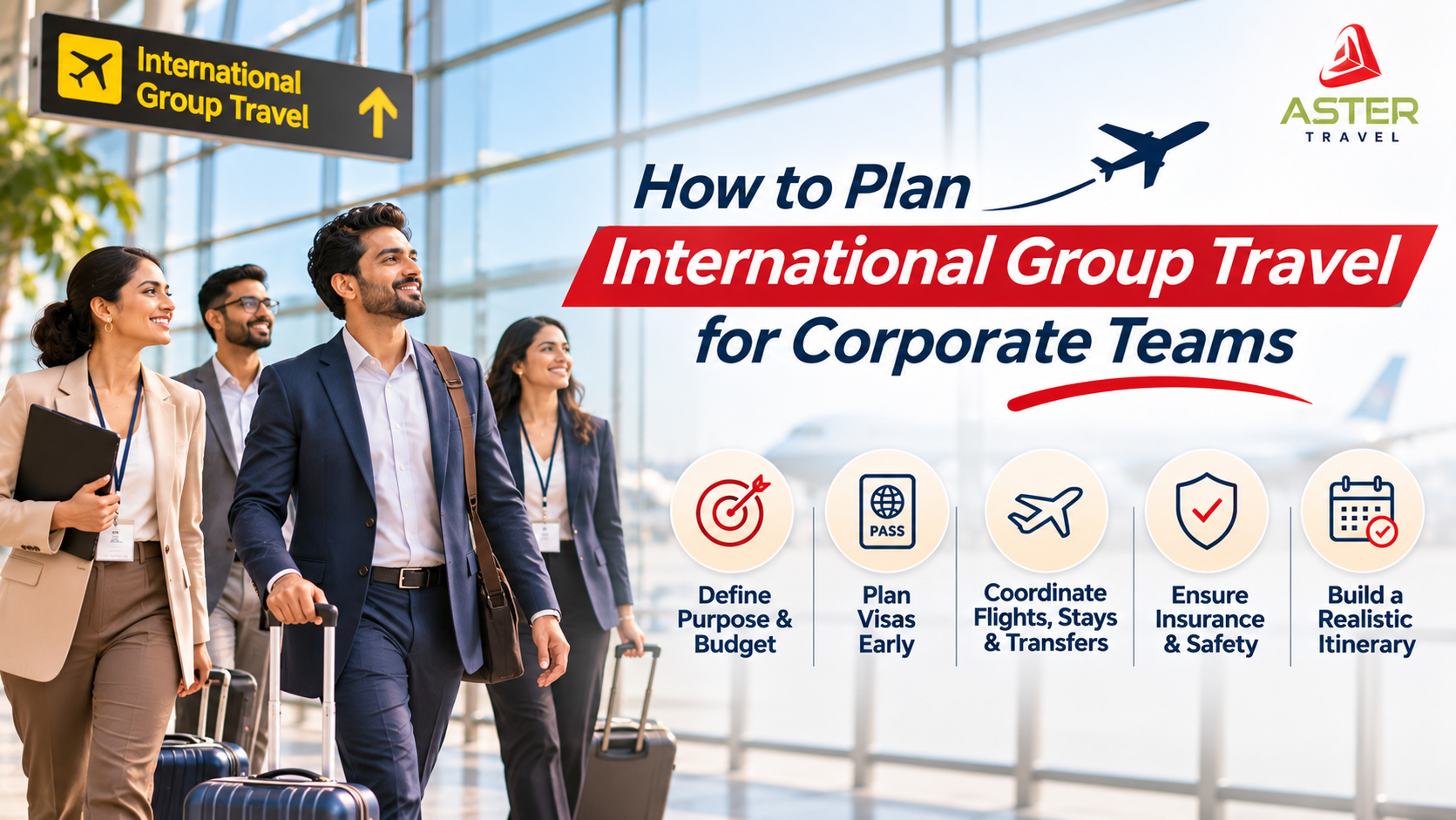
Planning international group travel for a corporate team comes down to getting a few things right, in the right order: a clear purpose and budget, early visa and document work, coordinated bookings, proper safety cover and a realistic itinerary. Skip one and the rest start to wobble.
The real challenge is scale. Every extra traveller adds another passport, another set of preferences and another chance for something to slip. For HR and admin teams, a single missed deadline can affect the whole group, and it usually surfaces at the worst moment, like the airport.
In this blog, we'll walk through the key steps, from setting your budget to handling visas, logistics and safety, so your team's trip runs smoothly.
Define the Purpose, Budget and Headcount First
Before you look at destinations, get clear on why the team is travelling. An incentive trip, a leadership offsite and a client conference each need different venues, schedules and spending. The purpose should drive every decision after it.
Next, fix a budget and a realistic headcount. Good corporate group travel planning treats the whole group as one project with shared dates, policy and spending limits, not a pile of individual trips. Count flights, hotels, local transport, meals, visa fees and insurance, and keep a small buffer for surprises.
Confirm who approves what, too. It sounds dull, but unclear approvals are one of the quickest ways to lose weeks.
How Early Should You Start Visas for International Group Travel?
As early as you can, ideally the moment the destination and headcount are confirmed. Visa timelines vary by country and can stretch when many applications arrive together, so waiting for final flight bookings is a risky habit.
Start by checking that every passport has enough validity for the trip. Then collect documents through one shared checklist with a single person responsible. For larger groups, some embassies respond better when you share the full itinerary and the reason for choosing that destination. A few countries now run dedicated group visa programmes for business events, which can reduce fees and processing time, so ask before assuming the standard route.
Also watch for newer entry formalities, such as the digital arrival cards some destinations, including Singapore, now require. They are easy to forget and awkward to fix at check-in.
Coordinate Flights, Stays and Transfers as One Plan
This is where international travel coordination either feels effortless or turns into a spreadsheet nightmare. Think of flights, hotels, transfers and meeting times as links in one chain.
Flights are usually the biggest line in the budget for international group travel, so be methodical. Group blocking lets you hold a set number of seats so the team flies together, and it can unlock better rates. Still, a group fare is not automatically the cheapest option, so compare it with individual fares before committing. Choose flexible cancellation terms wherever possible, because headcounts change.
Then match everything else to arrival times. A hotel that cannot check in forty people at 6 a.m., or a coach waiting for a flight that landed early, can drain energy before the programme even begins.
What Insurance and Safety Steps Does a Corporate Group Need?
Every group should carry travel insurance that covers medical emergencies, cancellations and other disruptions. It is worth comparing group policies so no one is left out, and reading the fine print on pre-existing conditions and adventure activities.
Beyond insurance, do a quick risk check on the destination and share a one-page briefing before departure. It should include:
- Emergency numbers and the nearest embassy details
- Hotel address and a nominated team contact
- What to do if a passport is lost or a flight is missed
One study found that many business travellers had never been told who to call in an emergency. That is an easy gap to close.
Build a Realistic Itinerary and Arrange On-Ground Support
A packed schedule looks impressive on paper and exhausts people in practice. Leave room for jet lag, delays and a little free time, especially after long flights. Balance work sessions with experiences the team will actually enjoy, and ask about dietary and accessibility needs early.
On the ground, line up reliable local transport and a point of contact who can solve problems quickly. Have a backup plan for the activities most affected by weather or delays. This is where an experienced partner like Aster Travel adds real value, handling personalised itineraries and end-to-end logistics so your team can focus on the purpose of the trip rather than the paperwork.
Conclusion
Successful international group travel is mostly about sequence and ownership. Set the purpose and budget, start visas early, coordinate bookings as one plan, protect the team with insurance and a briefing, and build an itinerary with breathing room.
The best trips feel effortless to the people on them, which usually means someone did a lot of quiet work beforehand. Give that work the time it deserves, and your team will arrive rested, informed and ready to make the trip count.