



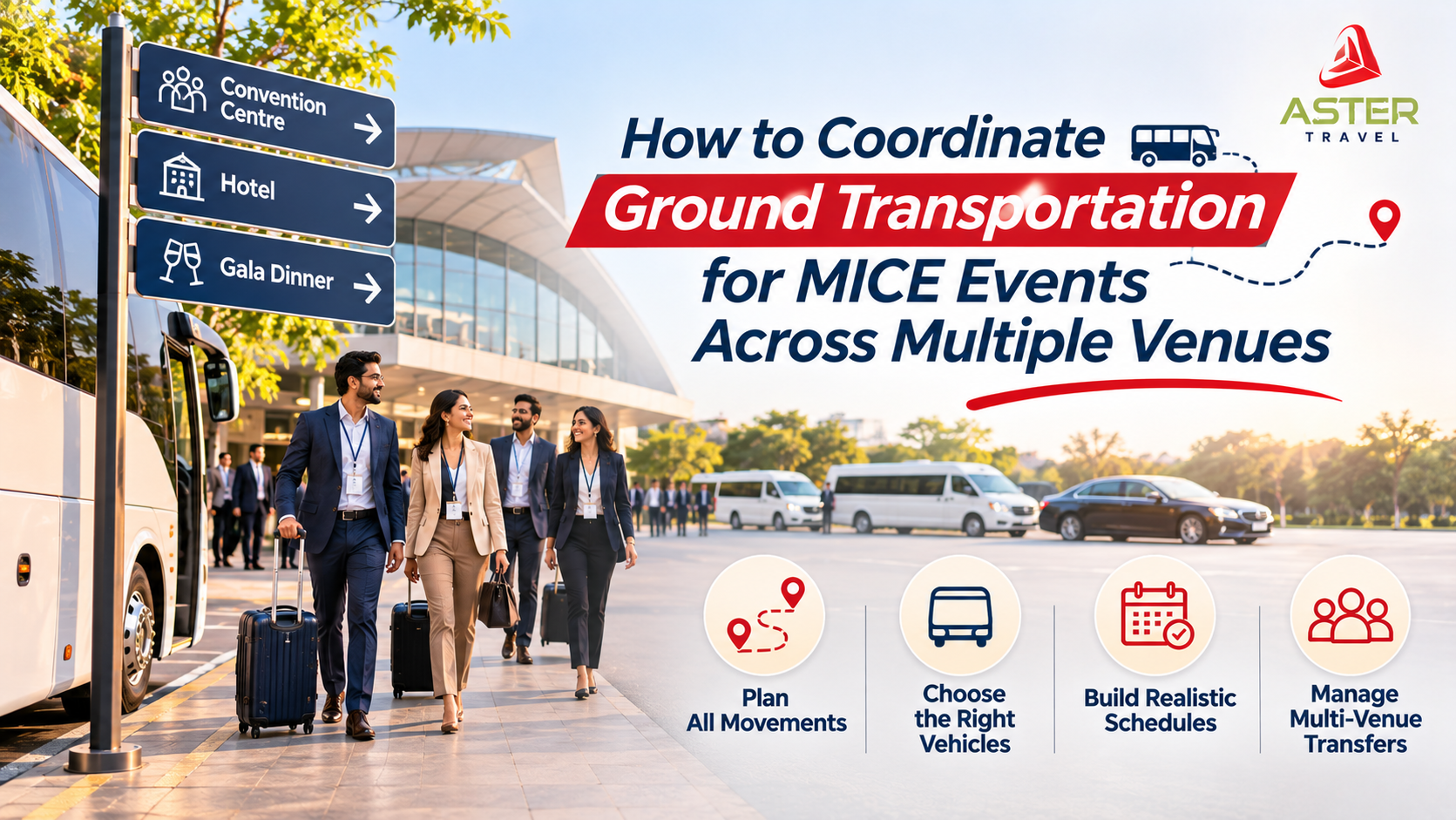
The simplest way to coordinate ground transportation across several venues is to build one central movement plan before you book anything, then run it through a single point of control. Good MICE transportation management means every guest, driver and venue works from the same schedule, not from scattered phone calls and guesswork.
Trouble usually starts when an event spreads across hotels, a convention centre and an offsite dinner. Each location brings its own access rules, traffic patterns and timings, and delegates rarely arrive or leave as one tidy group.
In this blog, we'll walk through how to map movements, choose vehicles, set realistic schedules and keep everything running smoothly on the day.
Why MICE Transportation Management Gets Harder With Every Extra Venue
A single-venue event is forgiving. Guests land, check in and walk to the ballroom. Add a second hotel, an exhibition hall across town and a gala dinner at a heritage property, and the picture changes fast.
Every new location adds pickup points, parking limits and timing dependencies. Some venues also restrict vehicle access, and a coach that turns up unannounced can jam an entrance. Traffic adds another layer, especially in Indian metros where the same 10 km can take 15 minutes or an hour.
The answer is not simply more vehicles. It is better planning, and that starts with knowing exactly who needs to go where.
Map Every Movement Before You Book a Single Vehicle
Start with a simple movement matrix. List every journey the event needs: airport arrivals, hotel to venue, venue to venue, dinner transfers and departures. Next to each, note the headcount, timing and who is travelling.
Your best data sources are flight details, hotel room blocks and the registration list. Arrival patterns tell you what kind of service fits. If guests trickle in all day, fixed shuttles will run half empty, so on-call cars or small vans work better. If most people land on a few flights, group coaches make sense.
Corporate event transfers are also far easier when you begin early. Most specialists suggest six to eight weeks ahead, which leaves time to confirm vehicles, venue permissions and driver briefings. Leave it later and you are choosing from whatever is left.
Match the Vehicle to the Passenger
Not everyone on your guest list needs the same ride. Grouping people by profile keeps costs sensible and the experience right.
VIPs and Speakers
Sedans or premium SUVs with a named driver work best, with a text message sent beforehand. Punctuality matters most here, so keep a backup car nearby.
Delegate Groups
Minibuses and coaches suit people moving together, such as the opening session or a gala. Give each coach a number and a host so guests know exactly where to board.
Staff and Vendors
Your team and suppliers often move earliest and latest, usually carrying equipment. Give them their own vehicles instead of squeezing them into guest shuttles.
How Many Vehicles Do You Need for a Multi-Venue Event?
A common rule of thumb is one 14-seater van for every 10 to 12 attendees. That ratio leaves room for no-shows and staggered departures. Treat it as a starting point, then adjust using room block data and, if you have it, last year's shuttle usage.
Sound group transportation logistics also depends on staggering. If 300 guests leave the hall at the same minute, no fleet will feel big enough. Spread out session endings, release dinner tables in waves, and keep one or two floating vehicles for surprises.
Build Shuttle Schedules With Real Buffers
A schedule that looks perfect on paper but ignores traffic is the most common point of failure. Good MICE transportation management builds slack into every leg:
- Add at least 30 minutes before and after key sessions for delays.
- Allow 45 to 60 extra minutes for international arrivals, because of immigration and baggage.
- Confirm staging and parking with each venue in writing.
- Share a simple pickup map and timetable through your event app or printed itinerary.
Then drive the route yourself at the actual time of day. Ten minutes behind the wheel will teach you more than any spreadsheet.
Should You Use a Specialist Partner for Event Transportation?
It depends on scale. Hiring vehicles from a local operator can work for a small meeting at one venue. But with several venues, large headcounts and tight timings, you need more than buses and drivers. You need someone managing manifests, meet-and-greet staff, dispatch and last-minute changes.
That is the gap a full-service travel partner fills. Companies like Aster Travel handle transport as part of end-to-end event management, so the team planning your itinerary also controls the logistics behind it. One point of accountability usually beats juggling five separate vendors.
Run On-Ground Control and Learn From Every Event
On the day, appoint one transport lead with a direct line to every driver and the event team. A shared messaging group works well. Track each pickup as it completes, and hold a couple of vehicles in reserve for delays or sudden changes.
Afterwards, spend ten minutes reviewing. Which routes ran late? Where did guests queue? Ask a few delegates for feedback too. Those notes become the starting point for your next plan.
Conclusion
Coordinating transport across venues comes down to a few habits: map every movement, match vehicles to passengers, schedule with buffers and keep one person in charge. Done consistently, MICE transportation management stops being a daily scramble and becomes a system you can repeat.
The best transport is the kind guests barely notice. When people glide from airport to hotel to gala without wondering where their ride is, they remember the event and not the logistics, and that is usually the sign it was planned well.